
Understanding the Curve Within
About Pectus Deformities
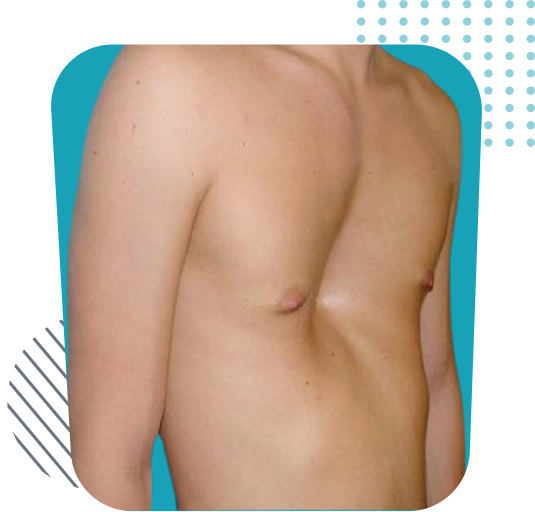
Chest wall deformities are often referred to as ‘Pectus’ and are relatively common conditions. This is when the chest wall appears irregularly shaped. Most are often noticed in childhood around the ages of 3-5, but often they can present in early adolescence. They often get worse during the child’s growth spurt, around the time of puberty and then stabilise in appearance once they have reached adulthood.
Introduction
Pectus deformities are congenital chest wall conditions, resulting in an abnormal shape of the chest. These conditions not only have physical implications but can also lead to significant psychological and emotional distress. At K.K. Enterprise, we believe in comprehensive awareness, enabling better treatment and care.
Pectus Arcuatum:
“Pectus arcuatum” is a rare type of chest wall deformity characterized by a convex or outward protrusion of the sternum (breastbone) and adjacent ribs. Unlike pectus excavatum, which results in a sunken or depressed chest, and pectus carinatum, which causes a protruding chest (“pigeon chest”), pectus arcuatum involves a more rounded or arched appearance of the chest.
Pectus arcuatum is also known as “arcuate pectus” or “rounded pectus.” It is considered a congenital condition, meaning it is present from birth, and its exact cause is not always clear. Like other pectus deformities, pectus arcuatum can vary in severity, and its impact on an individual’s health and appearance can differ from case to case.
Treatment for pectus arcuatum may involve:
Observation:
In mild cases, especially when the deformity does not cause significant functional or cosmetic concerns, no active treatment may be necessary. Regular monitoring may be recommended.
Physical Therapy:
Physical therapy and chest wall exercises may be prescribed to improve posture, muscle strength, and respiratory function.
Orthotic Devices:
In some cases, custom orthotic devices or braces may be used to apply pressure to the chest wall over time, helping to reshape it.
Surgical Correction:
Severe cases of pectus arcuatum may require surgical correction. The surgical approach can vary depending on the individual’s age, the degree of deformity, and other factors. Surgical procedures may involve reshaping the chest wall and sternum.
It’s important for individuals with pectus arcuatum to consult with a healthcare professional or specialist, such as a thoracic surgeon or pediatric surgeon, for a thorough evaluation and personalized treatment recommendations. Treatment decisions should be made based on the specific characteristics and impact of the deformity on the individual’s health and quality of life.
Please note that pectus arcuatum is relatively rare, and specific research or literature on this condition may be limited. If you or someone you know is dealing with pectus arcuatum, seeking guidance from a medical specialist experienced in treating chest wall deformities is essential to determine the most appropriate course of action.
Pectus carinatum:
Pectus carinatum, also known as “pigeon chest” or “keel chest,” is a chest wall deformity characterized by a protrusion of the sternum and ribs outward, creating a noticeable bump or ridge on the chest. Diagnosis and treatment of pectus carinatum typically involve a combination of medical evaluation, imaging studies, and treatment options tailored to the severity of the deformity and its impact on the individual’s health and quality of life.
Diagnosis:
Physical Examination: A healthcare provider, such as a pediatrician, orthopedic surgeon, or thoracic surgeon, can often diagnose pectus carinatum through a physical examination. They will assess the appearance of the chest and the degree of protrusion.
Imaging Studies: Imaging tests like chest X-rays, CT scans, or MRI scans may be ordered to evaluate the severity of the deformity and its impact on the internal structure of the chest.
Treatment:
The treatment of pectus carinatum varies depending on several factors, including the age of the patient, the severity of the deformity, and the presence of symptoms. Treatment options may include:
Observation: In mild cases where the deformity is not causing significant physical or cosmetic concerns, observation may be recommended. Regular monitoring can help ensure that any changes are identified early.
Physical Therapy and Exercise: Physical therapy and chest wall exercises may be prescribed to address any associated symptoms, improve posture, and strengthen the chest muscles.
Orthotic Devices: Orthotic devices, such as chest braces, may be used to apply continuous external pressure to the protruding chest. These devices aim to gradually reshape the chest over time.
Surgical Correction: For moderate to severe cases or when non-surgical treatments are not effective, surgical correction may be recommended. The surgical procedure for pectus carinatum typically involves:
Minimally Invasive Repair: In many cases, a minimally invasive surgical technique known as the “Ravitch-like” or “reverse Nuss” procedure is performed. It involves making small incisions and using a bar to push the protruding sternum back into place.
Traditional Open Surgery: In some complex cases, a traditional open surgical approach may be required to correct the deformity. This may involve removing abnormal cartilage and reshaping the chest wall.
The choice of treatment should be individualized based on the patient’s specific condition and needs. Consultation with a healthcare provider or a specialist experienced in treating pectus carinatum is crucial for making informed decisions about diagnosis and treatment. The goal of treatment is to improve both the cosmetic appearance and the functional aspects of the chest while addressing any associated symptoms or complications.
Please note that pectus carinatum is a relatively rare condition, and specific research or literature on this condition may be limited. Treatment options may evolve over time, so it’s important to consult with a medical professional for the most up-to-date information and guidance.