
Innovation Meets Healing
Treatment Options
Dive into our curated selection of breakthrough products, each meticulously designed for pectus care. From the precision-crafted braces for pectus carinatum to the transformative power of the vacuum bell, our product range is a testament to K.K. Enterprise’s commitment to excellence. Experience the fusion of cutting-edge technology and deep medical expertise, all crafted to offer unparalleled patient care.
Introduction
The treatment for pectus deformities, such as pectus excavatum and pectus carinatum, in the Indian population is similar to the treatment options available in other countries. The choice of treatment depends on the severity of the deformity, the age of the individual, and their overall health. Here are some common treatment options:
Observation:
In mild cases of pectus deformities, especially in adults, no active treatment may be required. Regular monitoring and lifestyle adjustments may be sufficient.
Physical Therapy:
Physical therapy and exercises can be beneficial for improving posture, muscle strength, and respiratory function in individuals with pectus deformities. Physical therapists can design a personalized exercise regimen to address specific needs.
Bracing:
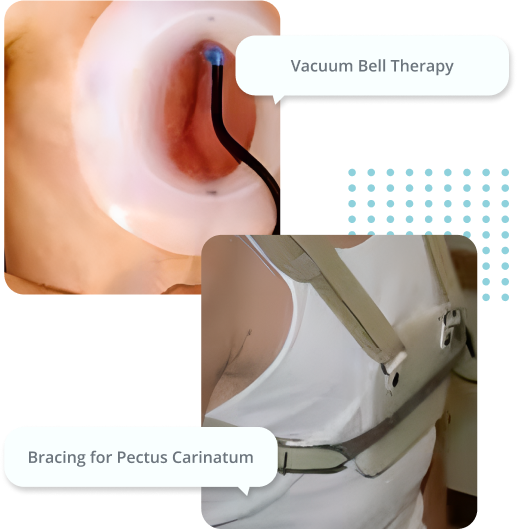
For pectus carinatum (pigeon chest), orthotic devices or braces may be recommended. These devices are designed to apply pressure to the protruding area of the chest over time, gradually reshaping it.
Surgical Correction:
Surgery is often considered for severe cases of pectus deformities, particularly pectus excavatum (sunken chest). There are two primary surgical procedures:
A. Nuss Procedure: This minimally invasive procedure involves inserting a curved metal bar beneath the sternum to push it outward into a more normal position. It is typically performed on younger individuals.
B. Ravitch Procedure: The Ravitch procedure is a more traditional open surgery that involves removing abnormal cartilage and reshaping the chest wall. It is often used for more complex cases.
Support Groups and Counseling:
Psychological support can be essential, especially for individuals with severe pectus deformities that affect their self-esteem or body image. Support groups and counseling can help individuals and their families cope with the emotional aspects of the condition.
To receive appropriate treatment for pectus deformities in India, individuals should follow these steps:
Consult with a Specialist: Seek consultation with a healthcare provider who specializes in thoracic surgery or pediatric surgery, as they have experience in treating pectus deformities.
Choose a Reputable Hospital: Research and choose a reputable hospital or medical center in India that offers the necessary surgical and non-surgical treatment options for pectus deformities.
Discuss Treatment Options: After a thorough evaluation, your healthcare provider will discuss the most suitable treatment options for your specific case.
Consider Second Opinions: In some cases, it may be advisable to seek a second opinion to ensure you receive the best possible care.
Join Support Groups: Connect with support groups and online communities where you can find information, advice, and emotional support from others who have experienced or are currently dealing with pectus deformities. Remember that the choice of treatment should be individualized, taking into account the patient’s age, the severity of the deformity, and overall health. Treatment plans should be developed in consultation with qualified healthcare professionals in India.
Braces for Pectus carrinatum:
Braces are a non-surgical treatment option for individuals with pectus carinatum, a chest wall deformity characterized by a protrusion of the sternum and ribs outward, creating a noticeable bump or ridge on the chest. Bracing is primarily used for mild to moderate cases of pectus carinatum and is often considered for children and adolescents whose chest wall is still growing and developing.
Here’s how braces are used to treat pectus carinatum:
1. Evaluation:
Before starting bracing treatment, a healthcare provider, such as a pediatrician or orthopedic surgeon, will conduct a thorough evaluation to assess the severity of the pectus carinatum deformity and determine if bracing is a suitable treatment option.
2. Custom-Fitted Braces:
If bracing is recommended, custom-fitted orthotic braces are designed to fit the individual’s chest. These braces are typically made of lightweight materials, such as plastic, and are adjustable to apply pressure to the protruding area of the chest.
3. Treatment Schedule:
The individual will be instructed on how often and for how long to wear the brace each day. Typically, bracing sessions range from several hours per day to full-time (around 20-23 hours per day), depending on the specific treatment plan.
4. Gradual Pressure Application:
The brace applies continuous, controlled pressure to the protruding part of the chest. This pressure helps to gradually reshape the chest wall by pushing the sternum and ribs back into a more normal position.
5. Monitoring Progress:
Regular follow-up appointments with the healthcare provider are essential to monitor progress and make necessary adjustments to the brace. Over time, the brace may be tightened or modified to ensure effective treatment.
6. Duration of Treatment:
The duration of bracing treatment can vary depending on the individual’s age, the severity of the deformity, and the response to treatment. Treatment may span several months to a year or more.
Important Considerations:
Bracing is most effective in children and adolescents whose chest walls are still growing and developing. It may be less effective in adults.
Compliance with the treatment plan is essential for successful outcomes. The brace should be worn consistently as prescribed by the healthcare provider.
Mild discomfort, skin irritation, or pressure sores may occur initially, but these issues are usually temporary and can often be managed with adjustments to the brace.
Bracing is typically considered before surgical options for individuals with mild to moderate pectus carinatum. However, in cases of severe deformity or when bracing is ineffective, surgical correction may be necessary. The decision to use braces for pectus carinatum should be made in consultation with a healthcare provider experienced in treating chest wall deformities. They can assess the individual’s specific condition and recommend the most appropriate treatment plan, which may include bracing or other interventions based on individual needs and goals.
The Vacuum Bell:
The vacuum bell is a non-surgical treatment option for individuals with pectus excavatum, a congenital chest wall deformity characterized by a sunken or depressed chest. This device is designed to apply external pressure to the concave chest, gradually reshaping it over time. It is typically considered for individuals who have mild to moderate pectus excavatum and are looking for a non-invasive approach to address the condition.
Here’s how the vacuum bell works and some important information about its use:
How the Vacuum Bell Works:
Application: The vacuum bell is a dome-shaped device made of medical-grade silicone or similar materials. It is placed over the depressed area of the chest.
Suction: A vacuum pump is used to create a seal between the vacuum bell and the chest. As air is removed from inside the dome, it creates a vacuum, which gently pulls the chest outward.
Pressure Application: The negative pressure inside the dome applies gradual and consistent pressure to the chest wall. Over time, this pressure can help reshape the chest by pushing the sternum and ribcage into a more normal position.
Important Considerations:
Treatment Duration: The vacuum bell treatment is not a quick fix and requires consistent use over an extended period, often several months or even years. Daily or regular sessions with the vacuum bell are typically recommended.
Age and Growth: This treatment is most effective in adolescents and young adults whose chest wall is still growing and developing. It may be less effective in adults.
Consultation: Before using a vacuum bell, individuals should consult with a healthcare provider or a specialist experienced in treating pectus excavatum. They can assess the severity of the condition and determine if the vacuum bell is an appropriate treatment option.
Supervision: It’s crucial to use the vacuum bell under the guidance of a healthcare professional who can provide instructions on proper usage and monitor progress.
Patience: Results may vary from person to person, and the process can be slow. Patience and commitment to the treatment plan are essential.
Potential Side Effects: While the vacuum bell is generally considered safe, some individuals may experience mild discomfort, skin irritation, or bruising in the treated area. These side effects are usually temporary.
Surgical Options: If the vacuum bell does not achieve the desired results or if the deformity is severe, surgical correction (such as the Nuss or Ravitch procedure) may still be an option.
It’s important to note that the vacuum bell is not suitable for all individuals with pectus excavatum, and its effectiveness can vary. Therefore, a thorough evaluation by a qualified healthcare provider is essential to determine the most appropriate treatment plan for each individual’s unique circumstances.